Appointment booking app for clients: what to look for before you choose
An appointment booking app for clients takes the "do you have anything free on Thursday?" calls off your hands: the client sees the open time slots and books on their own, anytime, even at night. The apps look similar, but they differ a lot in three things that matter in the long run: where the client books, what it actually costs you and who owns the client list.
Below are the types of apps you'll come across and the questions to ask before you pick one.
Three types of booking apps
1. Directory platforms. The client books on the platform, where you show up in a list next to other salons or practices in town. The upside is that the platform can bring you new clients. The downside: the person looking for you also sees the alternatives, right next to you. On top of that, they create an account on the platform, so the platform knows them too. What it does with their data is written in its terms. Payment varies: some platforms take a commission on bookings, others charge a subscription or a fee to show you higher up.
2. Standalone booking apps. You get a booking page, on the app's web address, which you send to your clients or post on Facebook. You usually pay a monthly subscription; some also have a free version, with limits. The client leaves your website or your Facebook page to book.
3. Bookings on your own website. Online booking happens right on the business's website: the client sees the services, the prices and the open slots in one place and doesn't go anywhere else to book. It doesn't bring you new clients, but it turns the people who already find you, from Google, a referral or your business card, into appointments.
The lines aren't strict: some standalone apps can also be added to your website, and some platforms also give you a direct link to your page. What matters is where the client actually books.
None of them is best for everyone. If you mostly need new clients, a directory platform may be worth the commission. If you already have clients who look for you specifically, bookings on your own website keep them with you.
What to check before you choose
Does it fit the way you work? A salon with three specialists has different needs than a practice with a single doctor, a studio with group classes or a guesthouse. Check whether the app can handle: several people with different schedules, services with different durations, breaks and time off, limited spots in a class.
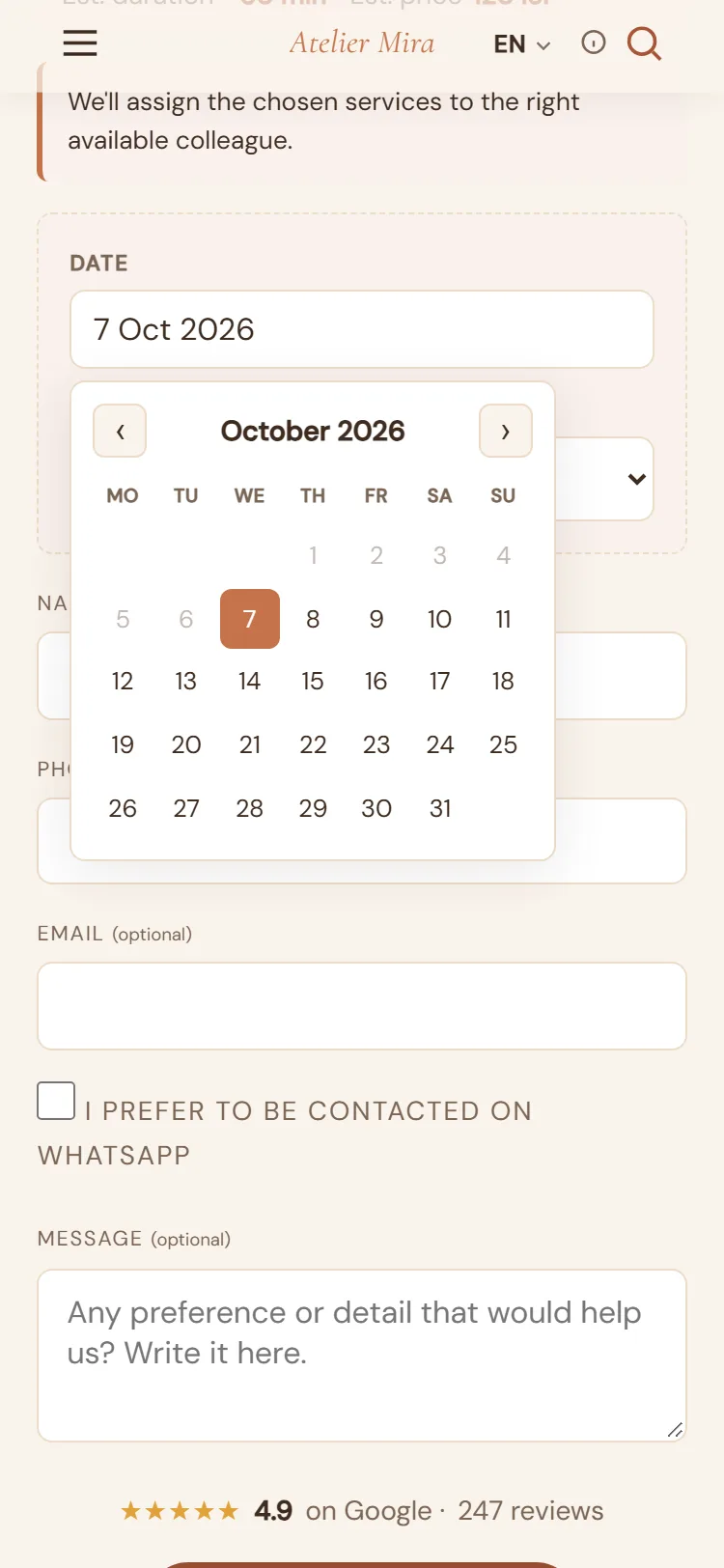
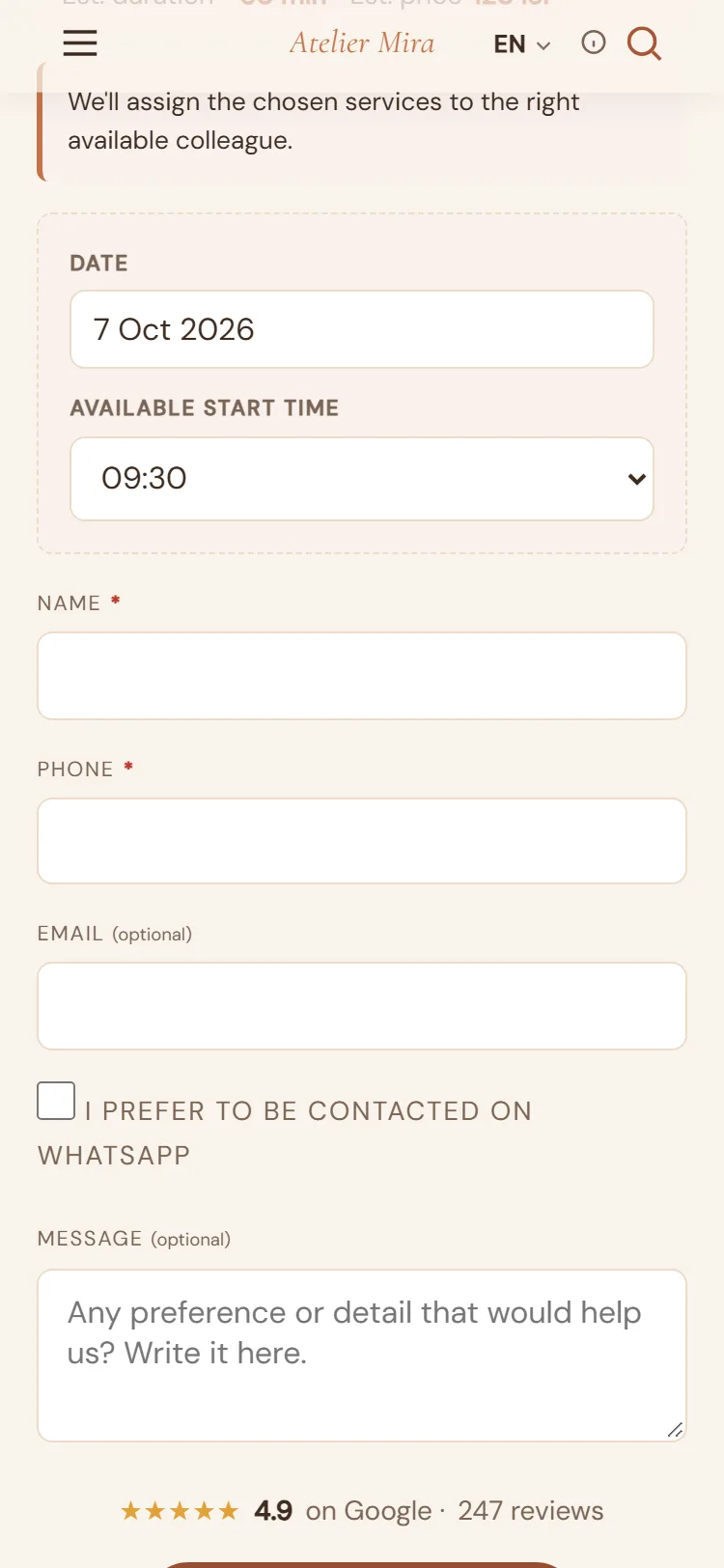
Can the client book without an account and without installing anything? Every extra step (a new account, a password, an app to download) loses some of your clients along the way.
What does the client get after booking? What matters is an instant confirmation, a reminder the day before and the option to cancel or reschedule on their own. Ask who sends the reminders and who pays for the SMS messages.
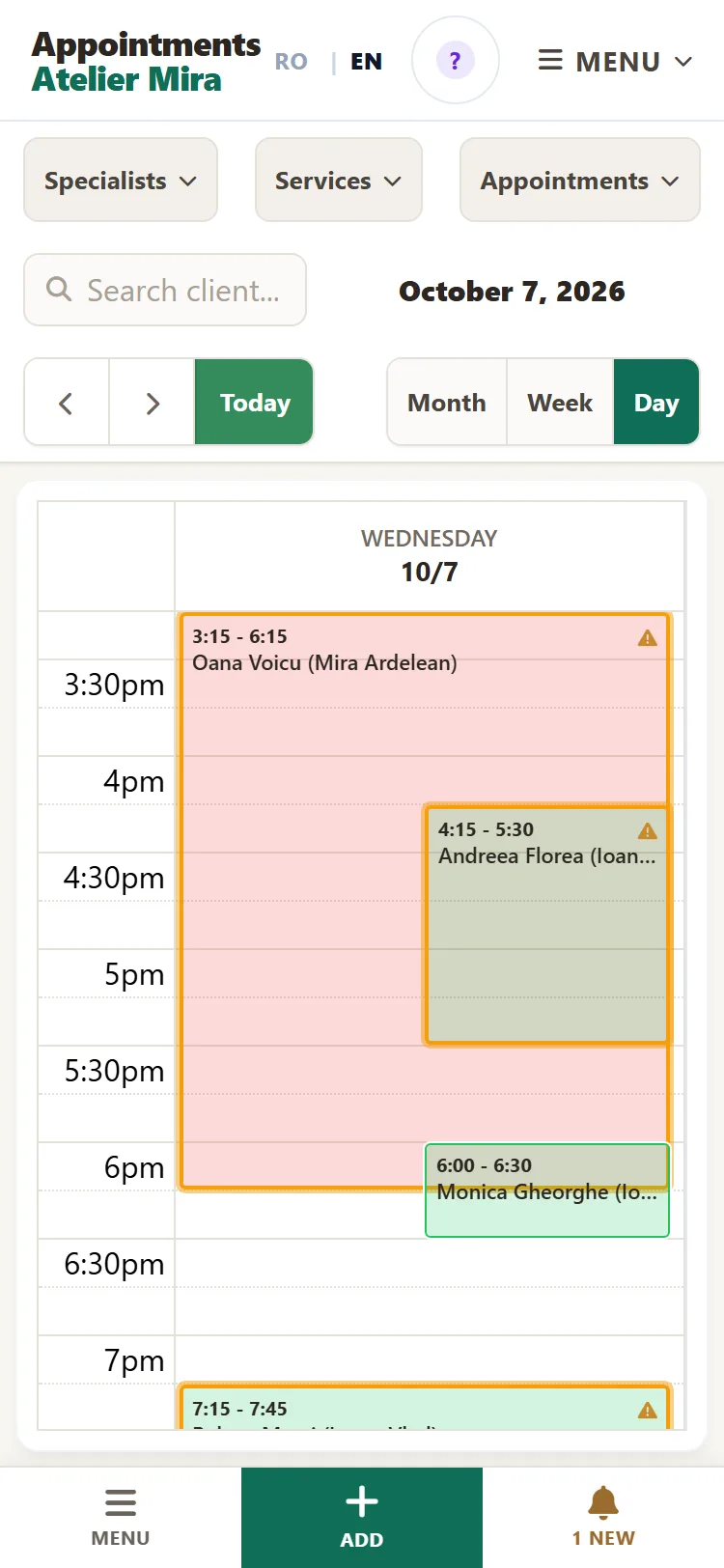
Does it work well on your phone? You usually check and move appointments on the go, not from a desk.
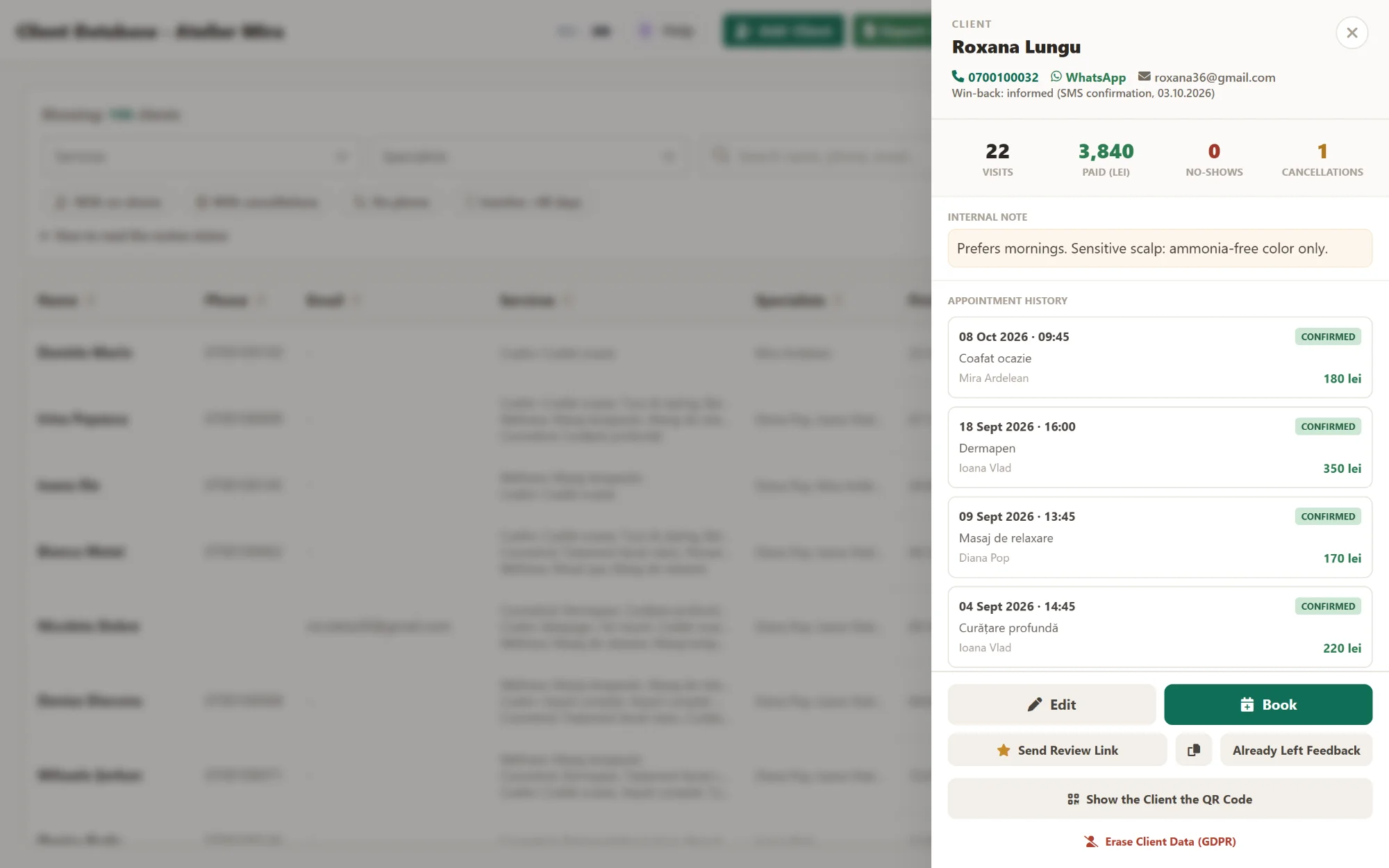
Who owns the client list? Ask whether you can export the list with its full history (who came, when, for what) and what happens to it if you leave. After a few years, the list is the most valuable thing you keep in the app.
How do you pay? A commission on each booking, a flat monthly subscription or a mix of the two. With a commission, the cost grows with the number of appointments; with a flat subscription, it stays the same.
What's free and what isn't? Many apps have a free version. Look at its limits: how many appointments a month, how many specialists, whether ads or the app's name show up, whether SMS reminders are paid separately.
How long are you committing for? What's the minimum term and how do you cancel?
Where is your clients' data kept? Your clients' names and phone numbers are personal data: ask where they're stored and what the app does with them.
How to choose, in short
- Write down how you work: how many people, which services, what durations, what hours.
- Pick two or three apps that fit and try them as a client, on your phone: how long does it take to book an appointment from scratch?
- Work out the cost over a year, at your real number of appointments.
- Ask, in writing, who owns the client list and how you take it with you.