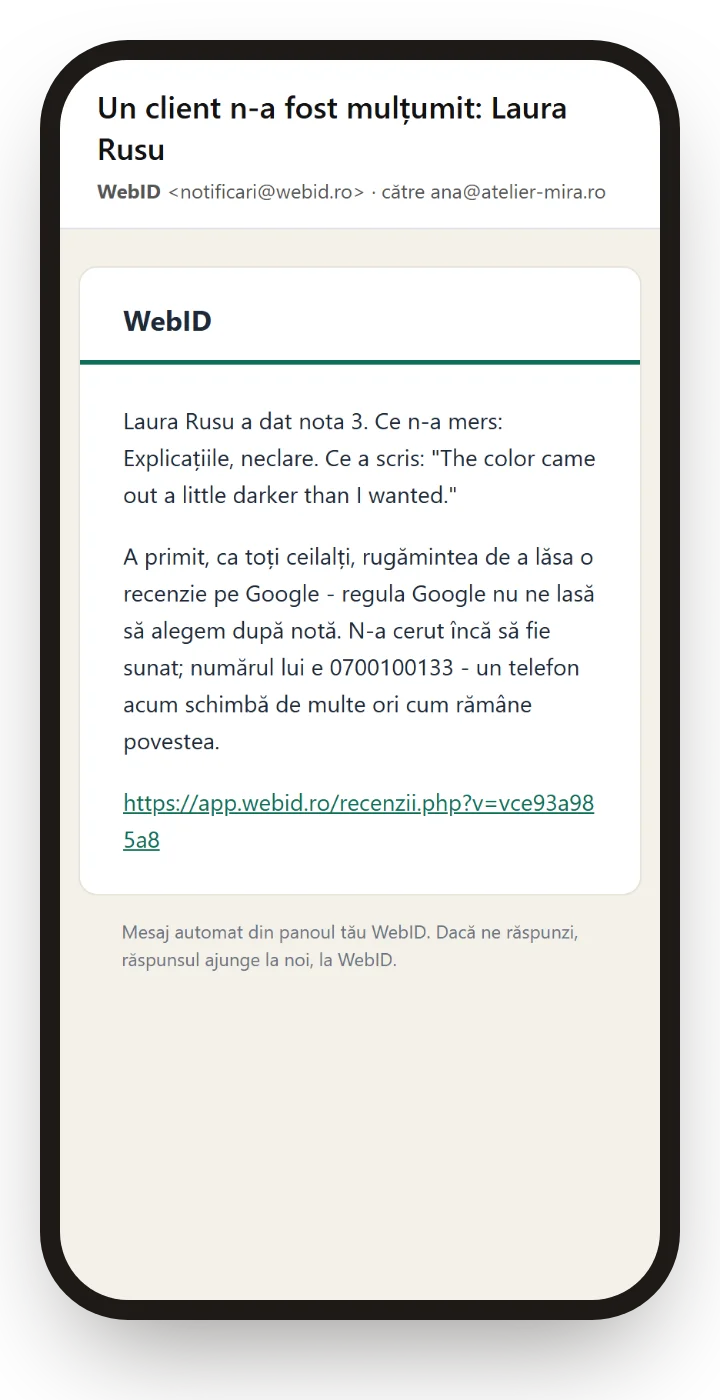
How much Google reviews matter for a small business
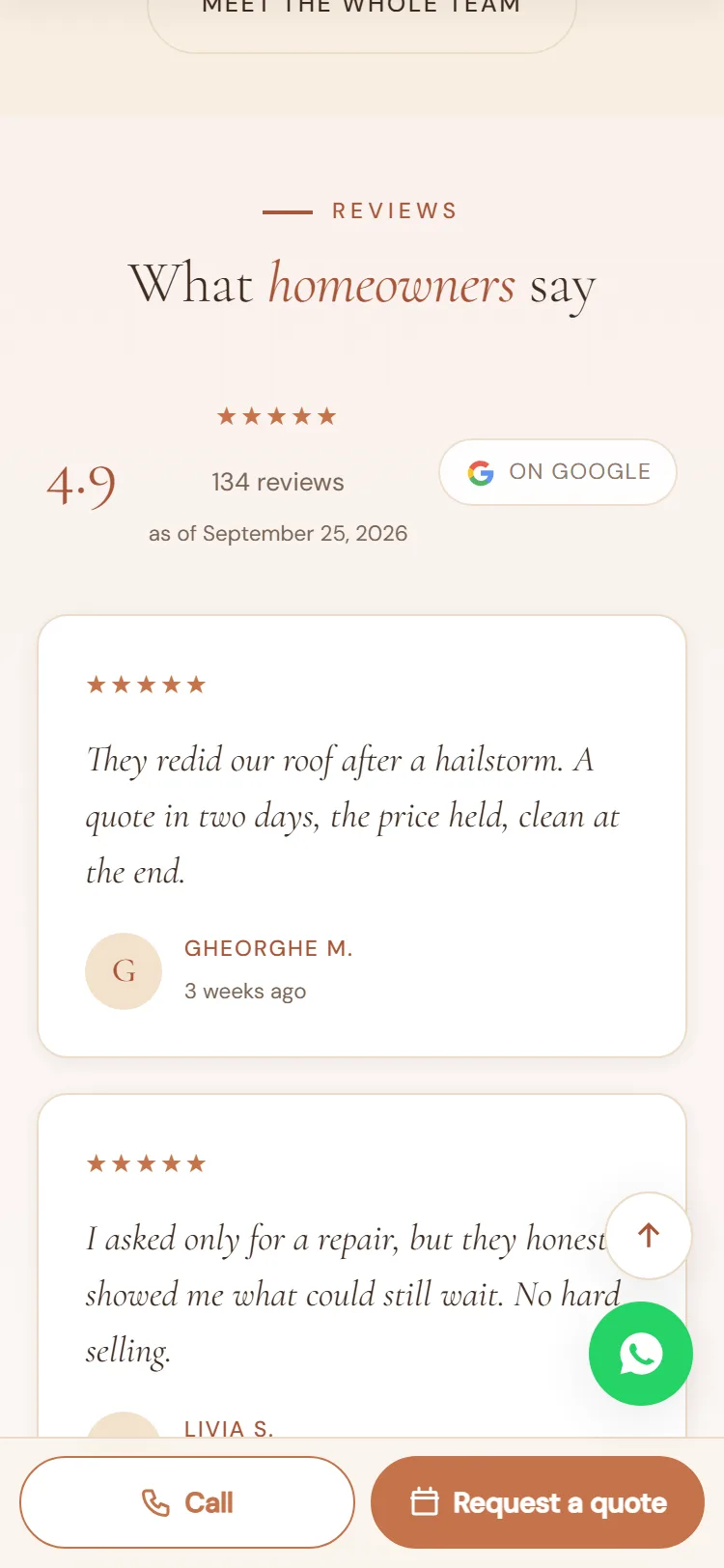
Google reviews matter in two ways. First, they help you show up on the map: Google says that more reviews and positive ratings can improve a business's position in local results. Then, once someone has found you, reviews are often what makes them call you and not the business next door.
Below is what matters with reviews, how to ask for them without bothering your clients and what you're not allowed to do.
How they help you show up on the map
Google says that local results (the map with the businesses in the area) depend on three things:
- relevance: how well your profile matches what the person is searching for;
- distance: how close you are to the person searching;
- prominence: how well known your business is; this includes the number of reviews and other websites that link to you.
Reviews fall under the third point. They're not the only thing that matters, but unlike distance, they're something you can grow month by month. To be on the map, though, you first need a business profile: How to add your business to Google Maps. Google also says something useful: there's no way to pay for a better position in local results (paid ads are separate and labeled as ads).
How they help you get chosen
Between two businesses at the same distance, people look at the ratings and at what other clients write. What matters:
- how many reviews you have: ten reviews say more than two;
- how recent they are: a review from last week shows the business is working now;
- what they say: "came the same day and left the place clean" says more than five stars with no text;
- how you reply: a calm reply, even to a negative review, shows how you treat your clients.
A 4.7 rating with a few more critical opinions is often more believable than a perfect 5.0. People know nobody pleases everyone.
How to ask for them the right way
Many happy clients don't leave a review because they don't think of it or don't know what to write, not because they wouldn't want to. What helps:
- ask openly, at the end of the job or the visit, while everything is still fresh;
- send a direct link to the review form, so they don't have to look for it on Google;
- ask everyone the same way, regardless of how you think it went;
- reply to every review, the good ones and the not-so-good ones.
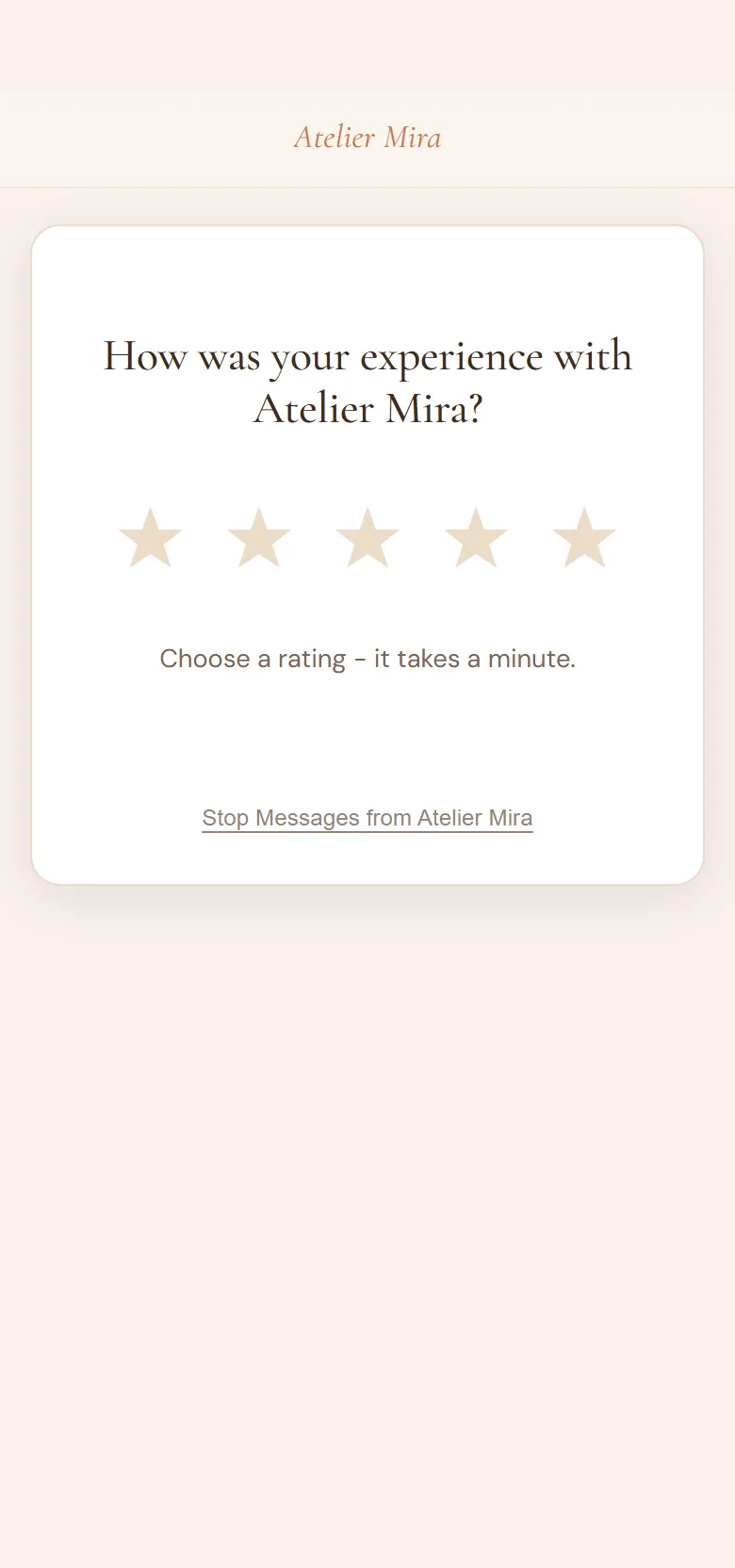
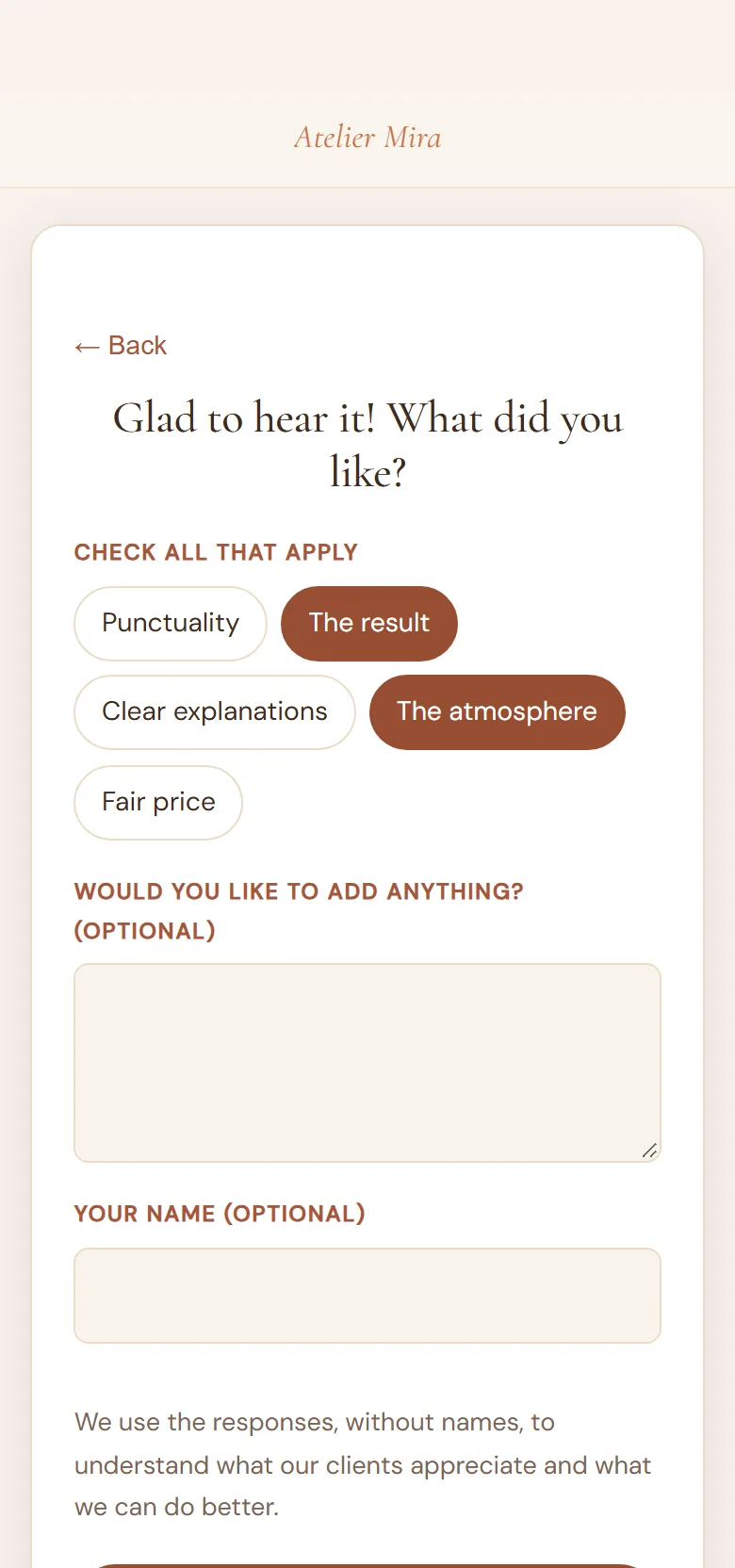
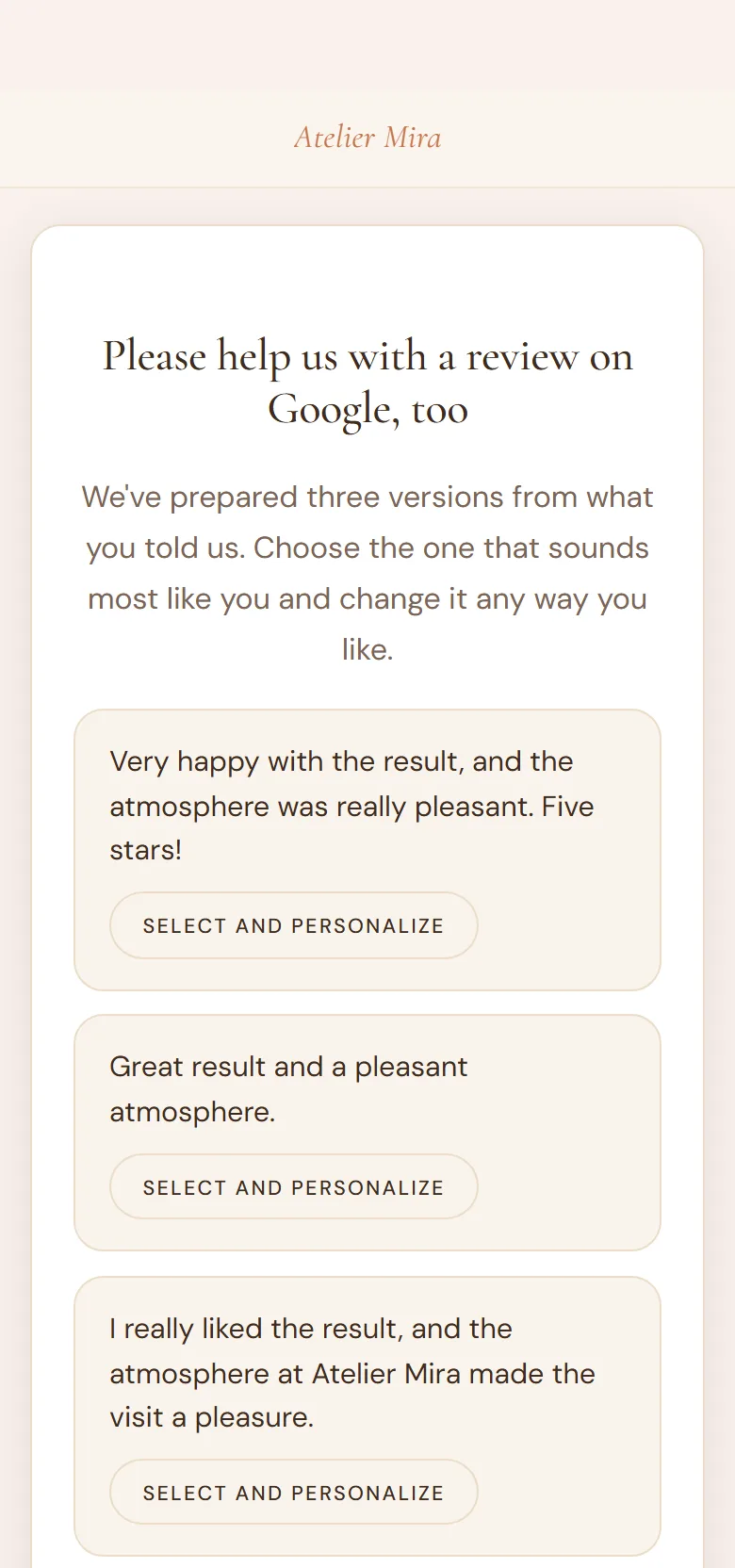
Example: the client says how it went, then gets the text ready-made; they post the review themselves.
What Google prohibits
Google's review policy prohibits, among other things:
- fake reviews that don't come from a real experience (written by you or bought);
- incentives: a discount, a gift or a free service in exchange for a review;
- selective asking: asking for reviews only from clients you think were happy, or discouraging the others from writing one.
There are tools that first ask clients how it went and send only those who give high ratings on to Google. That's exactly the selective asking Google prohibits. The risk: Google can delete the reviews, stop new reviews for a while and put a warning on the profile telling clients that fake reviews were removed.
Why some reviews don't show up
Google says it checks reviews before publishing them, and sometimes the check takes a few days. If a review is missing, it's usually one of these cases:
- it's still being checked: it may show up later;
- it was removed for breaking the policy: it looks fake or comes from someone with a conflict of interest (you, an employee, a business partner). Google says reviews removed this way aren't restored;
- the business profile was merged with another one: reviews may be delayed by a few days;
- the client's phone or version of Google Maps is too old: they can't leave the review.
Reviews that break the rules but are still visible can be reported from the profile. All the cases are on Google's page about missing or delayed reviews.
What to do with a negative review
- don't reply in anger: let a day pass if you need to;
- thank them and acknowledge what was real in the complaint;
- say what you're doing so it doesn't happen again, or offer to talk on the phone;
- don't reveal any details about the client in your reply.
The reply isn't just for the unhappy person. It's also for everyone who'll read it later.