Clients who don't show up for appointments: what it costs you and how to cut empty slots
A client who doesn't show up for an appointment and doesn't let you know costs you: you lose the money for that hour and, if someone else would have wanted it, that other client too. You can't get everyone to show up, but you can help them let you know in time. And a slot you're told is free a day ahead can still go to someone else.
What it costs you, with your own numbers
Do a simple calculation, for a typical month:
how many appointments stay empty × how much you take in on average per appointment
If four appointments of 150 lei each stay empty in a month, you've lost 600 lei, which is 7,200 lei a year. Put in your own numbers. The result is often bigger than you'd expect, because an empty hour doesn't show up anywhere; it's just missing from what you take in.
Why clients don't show up
It's not necessarily bad faith. Empty slots often come down to three reasons:
- they forgot, especially when the appointment was made a week or more in advance;
- something changed and they found it hard or awkward to call and cancel;
- they didn't feel the appointment mattered, because it wasn't confirmed or they didn't hear anything from you after they called.
Each reason has a fix.
What cuts empty slots
1. Instant confirmation. Right after booking, the client gets a message with the day, the time, the address and what to bring. The appointment becomes "real", and they have somewhere to look up the details.
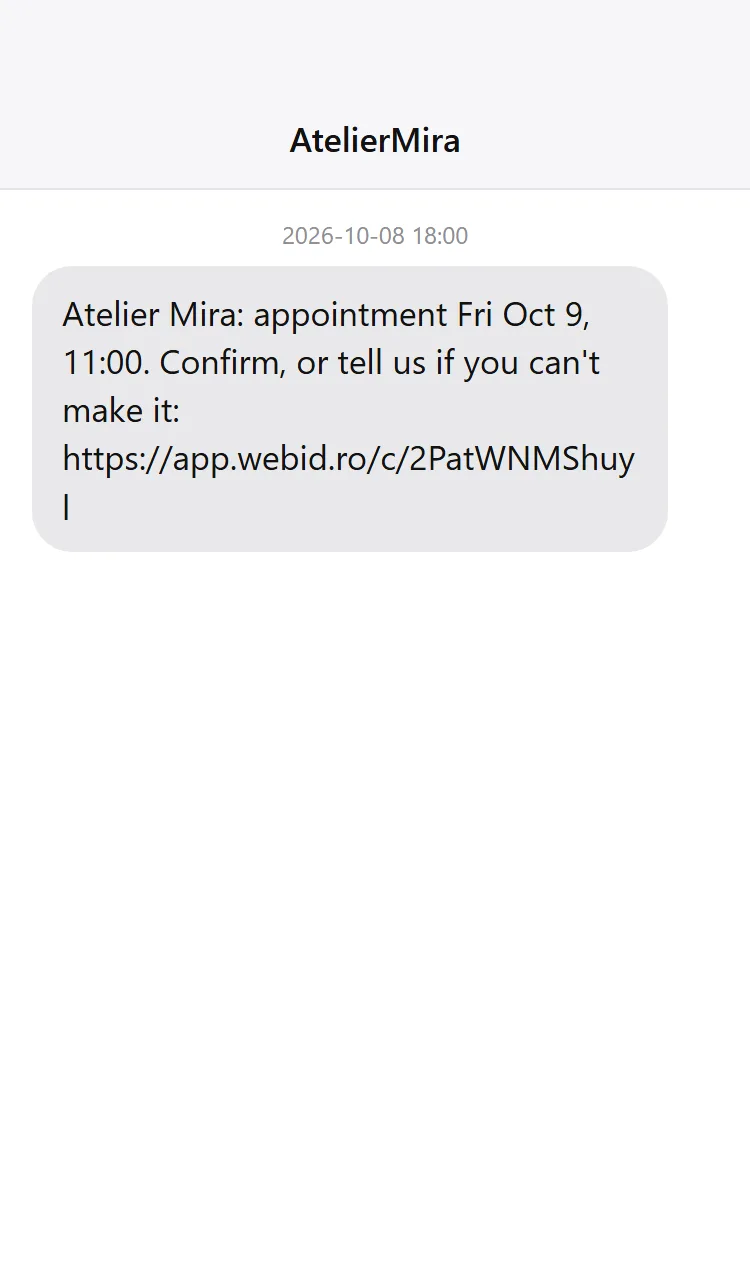
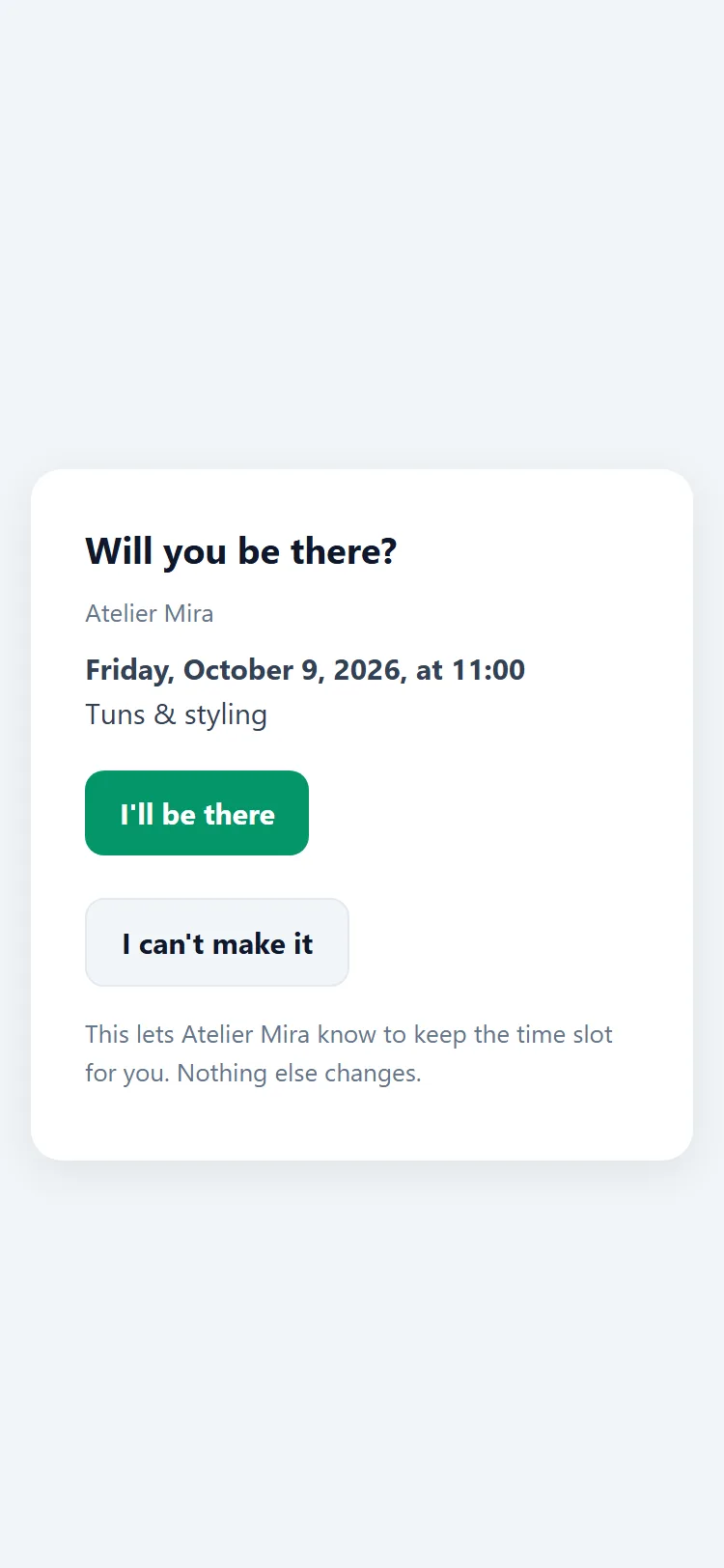
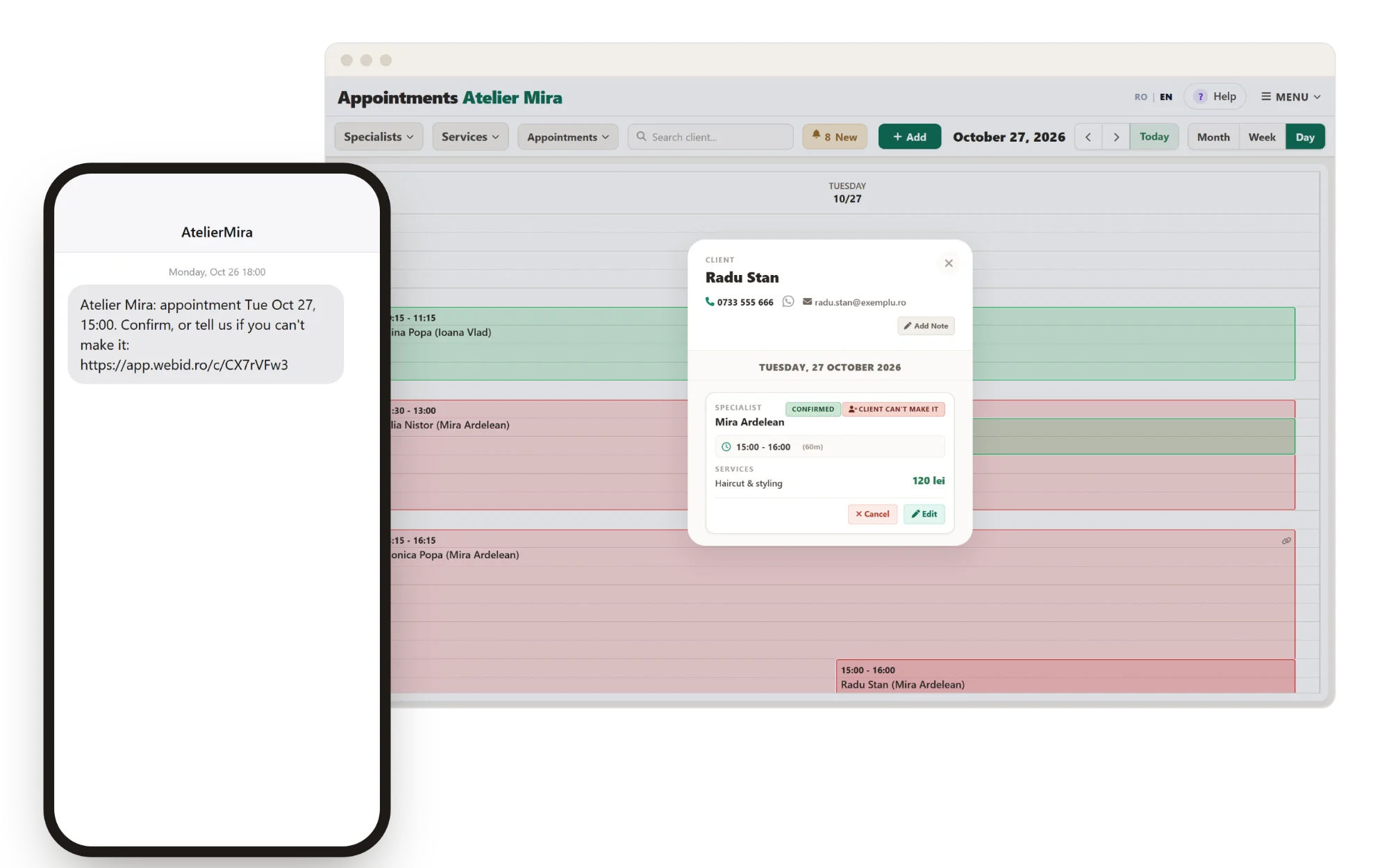
2. A message the day before, with a reply. The day before, the client gets a message asking them to confirm they're coming or to let you know they can't. Those who forgot remember, and those who can no longer make it reply to you, without having to call. For you, a slot you're told is free is a slot you can give to someone else.
3. Easy cancellation. It seems paradoxical, but a client who can cancel with one click is more likely to let you know than one who has to call. Give them a simple way: a link in the message, which they use to let you know right away.
4. A cancellation policy, in writing. Say clearly, on your website and in the confirmation message, until when they can cancel at no cost (for example "at least 24 hours in advance"). It doesn't have to be strict; it has to be known.
5. Keep an eye on the ones who often don't show up. Note who didn't come without letting you know. The second or third time, you can ask them to confirm by phone or to pay a deposit.
When a deposit makes sense
A deposit (part of the price, paid when the client books) can cut empty slots, but it can also put off new clients. It makes sense mostly:
- for long or expensive services, where an empty slot costs you a lot;
- for clients who have already missed an appointment without letting you know;
- in busy periods, when the slots fill up anyway.
If you ask for a deposit, say up front how much it is, how the client pays it and what happens to the deposit if they cancel in time.
In short
- Work out what empty slots cost you, with your own numbers.
- Send the confirmation right away and a message the day before that the client can reply to.
- Make canceling easy and your cancellation policy known.
- Keep track of the clients who often don't show up and save the deposit for them and for long services.