What a service page that gets calls looks like
A service page gets calls when it answers, in a one-minute read, the questions people would ask you on the phone: what exactly you do, roughly how much it costs, how long it takes, whether you come to them and why they should choose you. A common mistake is a single page with a long list of services and no details at all. People learn nothing and call whoever told them more.
Below is the structure of a service page, with an example for a plumber. It works just as well for a salon, a practice or a repair shop.
One page for each important service
People search for "desfundare scurgere Cluj" (drain unclogging, Cluj), not "servicii complete de instalații" (complete plumbing services). A separate page for each service clients often ask for tells Google clearly what you do, and the person who finds it lands directly on the service they're looking for. Less common services can sit together on a category page.
What the page should include
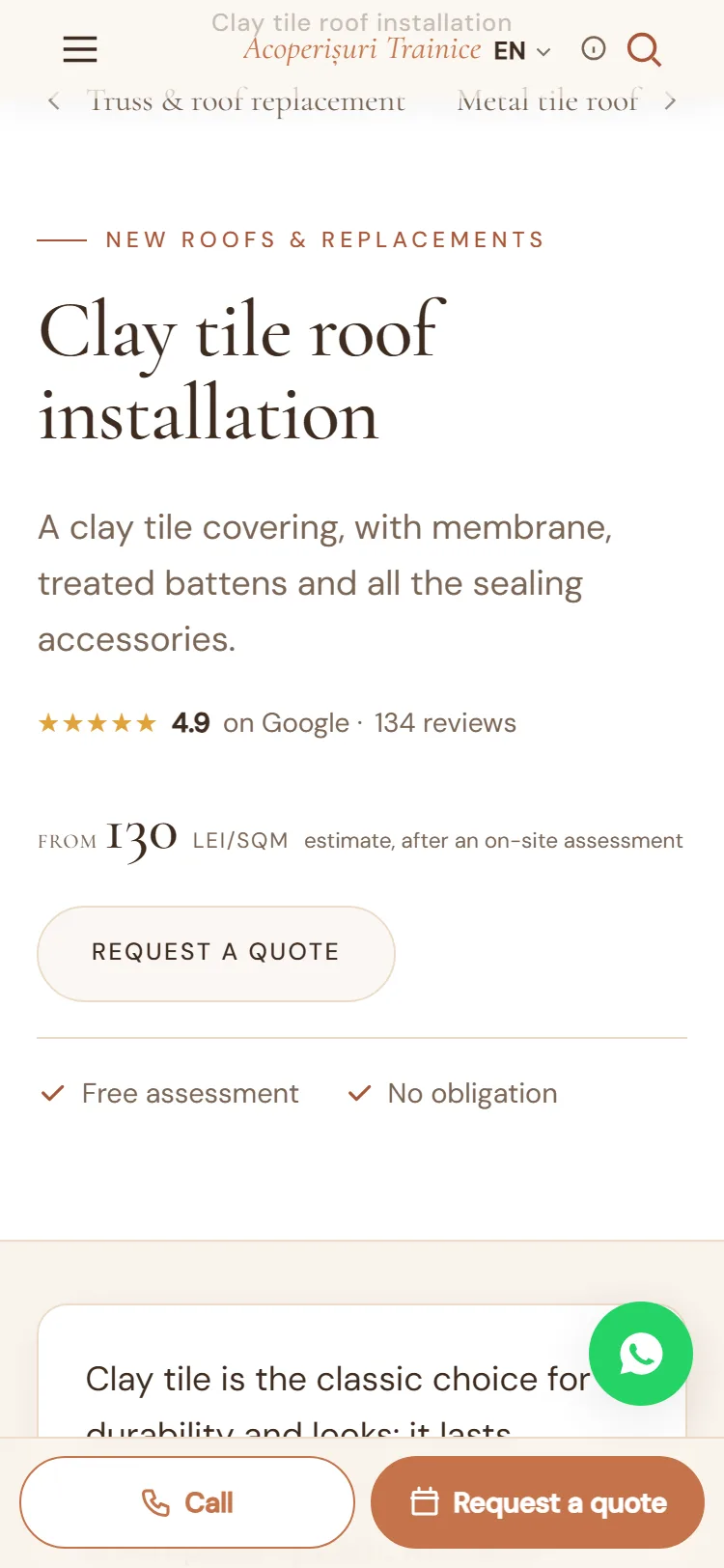
1. A title with the name the client searches for. "Drain unclogging in Cluj-Napoca", not "Sewer network interventions". If you work in a specific city, put it in the title. The same name also goes in the page title, the one Google shows in the results: short and with the city (the full checklist).
2. Two or three lines about the problem you solve. Start from the person's problem: "Is your sink or tub draining slowly? We come with the unclogging equipment and fix it, usually in a single visit."
3. The approximate price and why it varies. "From 150 lei, depending on the pipe route and how far down the clog is." Also say what it includes, for example the call-out or the materials. A price with its reason saves you a lot of calls that start with "how much will it cost me?", and the people who do call already know what to expect.
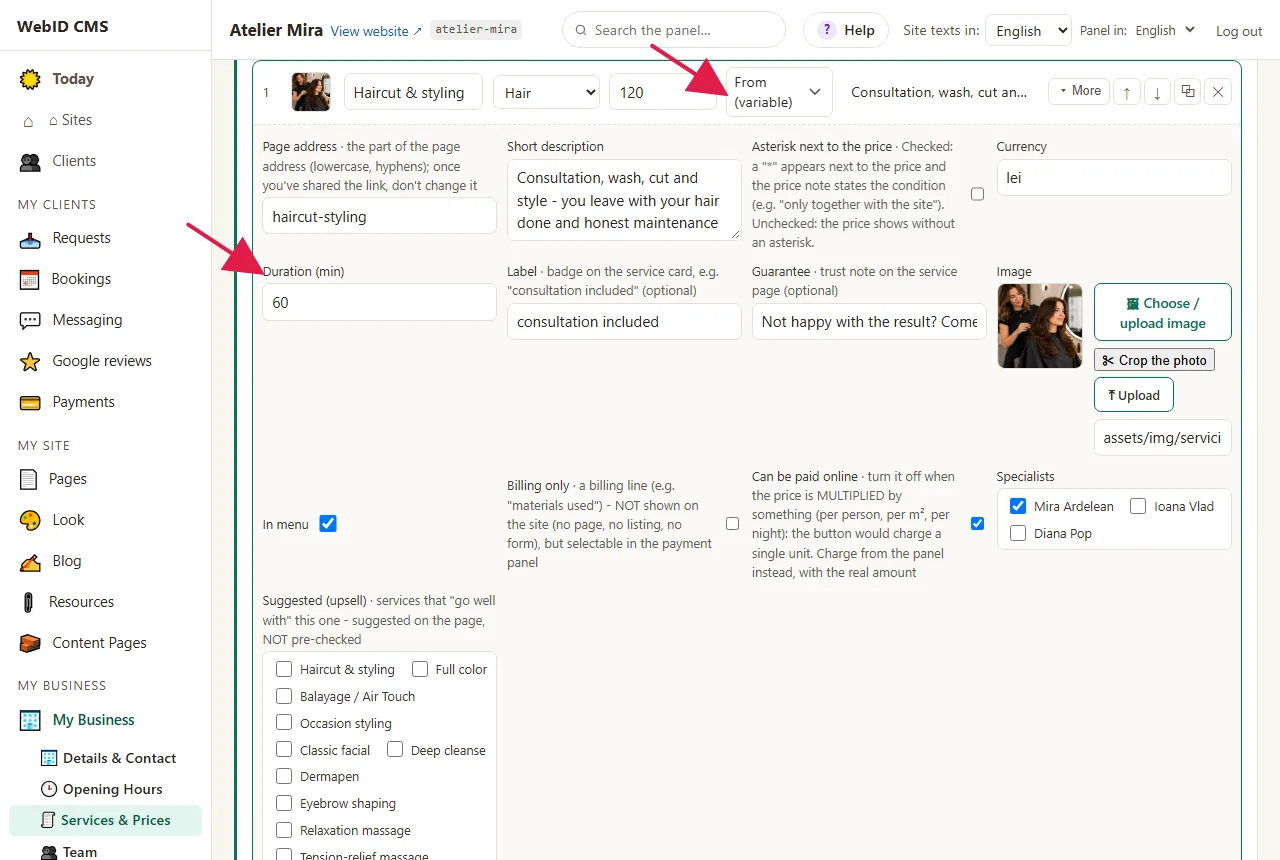
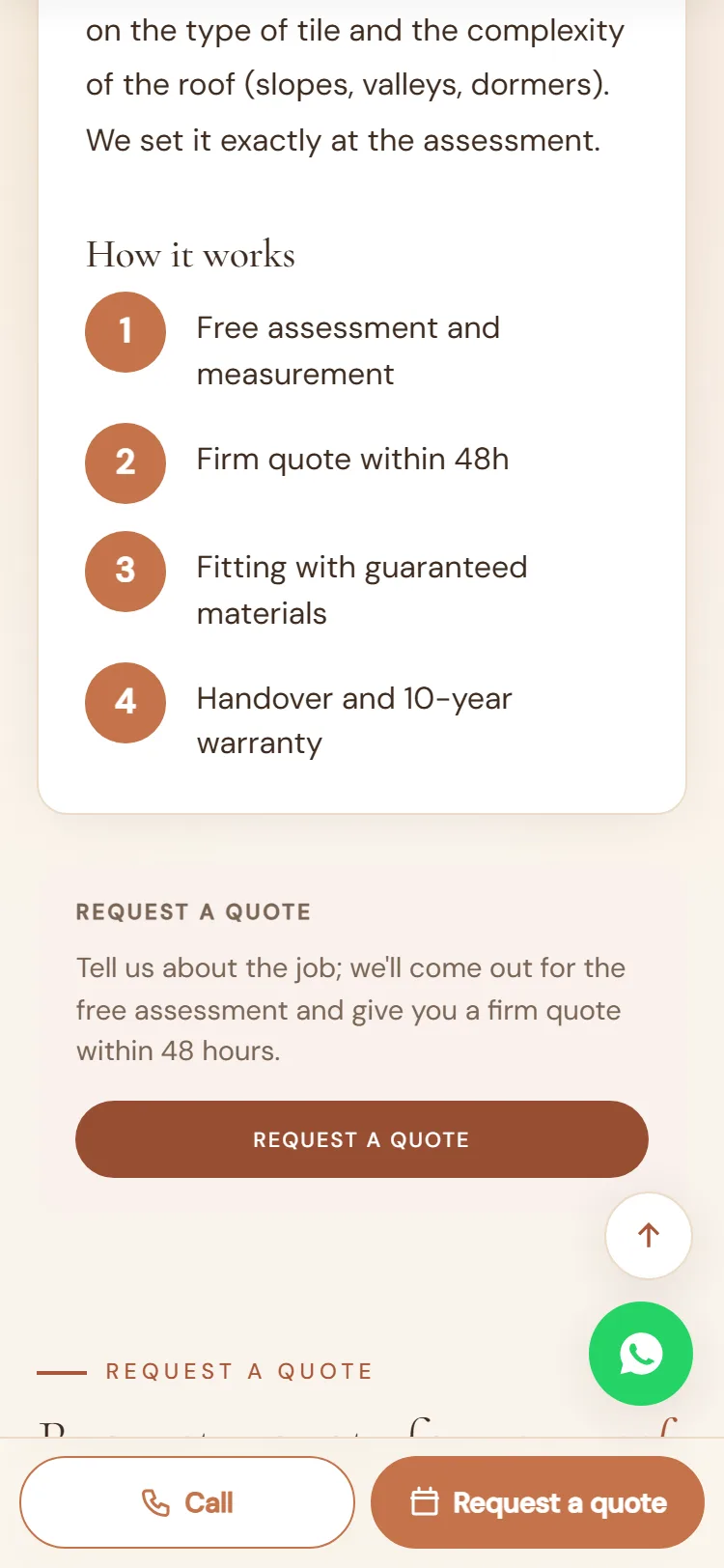
4. How it goes, step by step. What happens after the client calls you: when you come, what you do on site, how long it takes, what they need to get ready. People who know what comes next find it easier to call.
5. Where you work. The city and the neighborhoods or nearby towns. People from another city don't call you for nothing, and those in your area know you'll come.
6. Real photos. The work, the equipment, the team. A few sharp photos taken with your phone say more about you than stock photos (how to take them).
7. Proof. A review of this exact service, a license if the trade requires one, your years of experience if there are many.
8. Questions about this service. "Do you leave a mess?" "Do you work Saturdays?" "Do you offer a warranty?" Three or four short questions, with answers just as short.
9. The button in plain sight, at the top and at the bottom. The phone number that starts a call with one tap, or the booking button. At the top, for those who decide quickly; at the bottom, for those who read everything.
Example structure
Drain unclogging in Cluj-Napoca
Is your sink or tub draining slowly? We usually come the same day and fix it in a single visit.
From 150 lei, depending on the pipe route. [Call now]
How it goes: you call us → we set a time → we come with the equipment → we unclog it and check the drain → you pay at the end.
Where we work: Cluj-Napoca and the surrounding towns, up to 20 km.
Photos of our work · a review · our licenses
Questions: Do you leave a mess? Do you work Saturdays? Do you offer a warranty?
[Call now] [Request an appointment]
The price, times and area in the example are only illustrative: use your own.
What to leave out
- a list of 20 services with no details at all, all on the same page;
- generic copy ("quality, reliability, professionalism"), which fits anyone;
- a hidden price behind "on request", without even saying what it depends on;
- long forms, with ten fields, for a simple question;
- identical pages where you only change the city name: Google may treat them as a trick (why), and people recognize them.